Angry Birds Friends
- 4.4
- Rating
- 100.00M
- Installs
- Free
- Price

 Analysis by App-foxy
Angry Birds Friends is the kind of arcade game I open when I want a quick round with a clear objective: aim, release the slingshot, and cause as much useful destruction as possible. It comes from Rovio Entertainment Oy and keeps the familiar bird-flinging idea focused on short puzzle challenges rather than a long story campaign. That makes it easy to understand within seconds, but the scoring and tournament structure give experienced players a reason to return.
I see it as a good fit for someone who enjoys replaying the same level to improve a result, not just completing it once. The basic game is free, and its age rating is Everyone, so it is approachable for a broad audience. At the same time, the presence of in-app purchases means I would not treat it as a completely pressure-free game, especially if competition starts to matter more than casual play.
How the slingshot puzzles work in everyday play
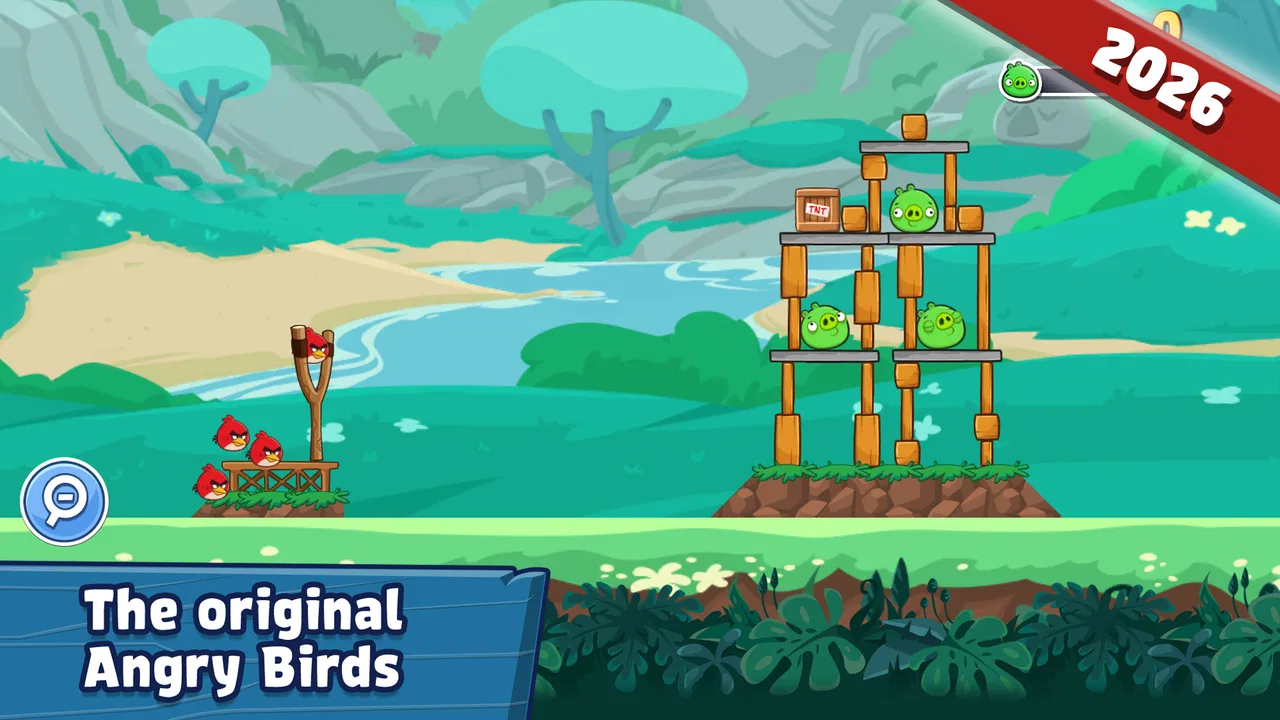
The appeal is still the satisfying combination of simple controls and surprisingly demanding physics. You choose an angle, adjust the force, and release a bird into a structure filled with obstacles and targets. A shot that looks nearly identical to the previous one can produce a very different result, which is why I often find myself trying a level again immediately after a near miss.
You May Also Like

 Blood Strike: 2.5 Anniversary
Blood Strike’s Loadouts Turn Every Drop Into a Tactical Gamble
A close look at Blood Strike’s custom loadouts: how fast access to signature weapons reshapes its battle royale rhythm, rewards preparation, and narrows the gap between fights.

 Pandora - Music & Podcasts
Pandora’s Music Is Easy to Start, but Harder to Recover
Pandora’s strength is its low-effort path from a seed to a station. Its weak spot is how much confidence it asks you to place in connection, setup, and quiet recovery.

 8 Ball Pool
 Is Built on Rivalries, Rematches, and Routine
A close look at the rivalries, rematches, shared routines, and unanswered safety questions that turn a quick pool match into a persistent mobile community.

 Samsung Music
’s Quiet Strength Is Playing What You Already Own
Its reach comes less from spectacle than from dependable access to a personal library. That simplicity is both the app’s strongest retention engine and its ceiling.

 AccuWeather: Weather Radar
AccuWeather Review: A Quick, Clear Forecast for Everyday Decisions
For everyday plans, the best forecast is the one you can understand quickly. AccuWeather makes rain timing, radar, and local conditions easy to act on, with a few trade-offs.

 Hill Climb Racing
Why Hill Climb Racing Still Turns Crashes Into One More Run
A tiny car, a bumpy hill and one more upgrade: Hill Climb Racing keeps resurfacing because its simple chaos makes every near-miss feel personal.
More From Our News Desk



The controls are well suited to touchscreens. I do not need a tutorial-heavy setup or a complicated menu system before playing. A short session works well when I am waiting for an appointment or taking a break from work, while a longer session naturally develops when I start chasing a better score. That flexibility is one of the game's strongest qualities.
The puzzle design rewards more than simply hitting the nearest target. I usually get better results by studying the whole structure first: which support is holding the largest section, where a chain reaction might begin, and whether a bird should be saved for a later opening. This makes each attempt feel like a small planning exercise rather than random tapping.
One useful habit is to separate a “learning shot” from a “scoring shot.” On the first attempt, I look for hidden weak points and observe how materials react. On the next attempt, I use that information to aim more precisely. This is especially helpful in tournament-style play, where a safe completion may be less valuable than a carefully planned high-scoring run.
The game’s global tournament focus changes the way I approach familiar levels. In a normal puzzle game, finishing can be enough. Here, I pay more attention to leftover birds, destruction chains, and the order in which I attack objects. A level can therefore remain interesting after I already understand how to clear it.
That replay value is also the main source of friction. If you prefer puzzles that constantly introduce new rules or a strong narrative, repeating stages for a higher score may feel shallow. The arcade format is deliberately compact, and its strengths are quick feedback, recognizable controls, and score improvement rather than deep character development.
What progress feels like after the first sessions
Early progress is easy to understand because the central skill is visible: better timing and better angles lead to better outcomes. I can feel myself improving when I stop wasting birds on obvious targets and begin planning the order of destruction. That learning curve is more satisfying than simply unlocking content through time.
However, score chasing can create a different kind of pressure. Once I have a result I am proud of, the next attempt is no longer about discovering the puzzle; it is about reducing mistakes. A missed angle or an unlucky collapse can make a replay feel frustrating, particularly when I know the level is technically solvable.
My practical advice is to set a stopping point before starting a tournament session. I might allow myself a few serious attempts, then move on even if the score is not perfect. Without that limit, the game can turn a short break into a repetitive search for one more point. This is not a flaw unique to this title, but the competitive structure makes it more noticeable.
The game is listed as free, which makes trying it straightforward. Purchases are available from $0.19 to $239.99 per item, so the range is wide enough that I would check every confirmation screen carefully before buying anything. The low entry price and the upper end of the purchase range represent very different spending situations; I would not assume that “free” means every progression path feels equally comfortable without spending.
I also recommend deciding in advance whether purchases are part of your personal limit. If I am playing only for relaxation, I can ignore the shop and treat every result as practice. If I am trying to compete seriously, I need to be more disciplined, because the desire to improve a ranking can make optional spending feel less optional in the moment.
Fairness matters more when scores are public
The competitive element is where I would examine the game most carefully. A global tournament can make a familiar puzzle feel exciting, but it also changes the meaning of a high score. In a solo arcade game, my result is mainly a personal achievement. Against other players, I naturally start asking whether everyone has access to the same practical opportunities.
I would not promise that every competitive outcome is purely skill-based. The confirmed purchase range establishes that optional spending exists, but it does not by itself explain exactly how purchases affect tournament performance. Because of that, my fair assessment is limited: the game clearly combines free access with paid items, while the precise relationship between spending and competitive advantage should be checked in the current game interface before committing to serious competition.
That uncertainty does not make the game unusable. It simply changes how I would play it. For casual tournaments, I can compare my own score with friends or treat the leaderboard as a motivation tool without assuming it is a perfect measure of ability. For players who need a tightly controlled, skill-only contest, a traditional offline arcade game or a puzzle title without purchases may be a better choice.
A sensible workflow is to play several rounds without buying anything and observe whether the free experience feels complete. I would pay attention to whether I can attempt the challenges comfortably, whether the game interrupts my rhythm with purchase prompts, and whether my enjoyment depends on ranking rather than the puzzle itself. That personal test is more useful than assuming every player will experience the spending model in the same way.
Another good approach is to use the tournament as a practice laboratory. Instead of immediately chasing the top position, I can test one change at a time: a lower release angle, a different first target, or saving a bird for a later structure. This keeps the competitive layer connected to genuine skill development and reduces the temptation to treat every disappointing result as a reason to spend.
For families, the Everyone rating makes the game broadly approachable, but I would still explain that free games can contain paid options. Younger players may understand the slingshot quickly without understanding the value of a purchase. I would supervise the first sessions and make sure the device’s purchase controls match the household’s rules.
What makes it different from other arcade puzzles
Compared with a simple endless arcade game, this title gives each attempt a more deliberate shape. I am not only reacting to objects arriving on screen; I am planning a limited sequence of shots inside a structure. Compared with a purely offline physics puzzle, the tournament framing adds a reason to revisit levels and compare results.
That combination is useful for players who want short sessions with a competitive edge. It is less suitable for someone looking for a calm, uninterrupted puzzle experience, because score comparison can turn relaxation into performance tracking. It is also not my first choice for a player who wants a deep role-playing system, a large exploration world, or a story that develops between levels.
The familiar Angry Birds style helps the game communicate its rules quickly, but familiarity can work both ways. If you already enjoy this type of physics puzzle, the quick start is a benefit. If you have played many similar slingshot games, the main question is whether tournaments and replayable scoring provide enough freshness for you.
I find the best use case is a player who likes measurable improvement but does not need every session to deliver new content. For example, during a short lunch break, I can play one or two attempts, notice why the structure collapsed differently, and put the phone away. Later, I can return with a specific adjustment instead of starting from zero.
Device expectations and practical details
The current version is 14.0.0, and the listed minimum operating system is Android 7.0. That makes it relevant to many Android users, although actual comfort will still depend on the device’s screen, touch response, and general condition. Precision matters in a slingshot game, so a phone with inconsistent touch input can make the experience feel harder than it should.
The game has reached over 100 million installs, with a 4.4 average from around 1.3 million ratings and roughly 51 thousand written reviews. Those figures show a large audience and strong overall reception, but they should not replace a personal test of the purchase model. A popular game can still be the wrong fit if you dislike repeated attempts, leaderboard pressure, or optional spending.
I would also keep the session length in mind. The game is easy to pick up, but the most demanding part is often not learning the controls; it is deciding when to stop replaying a level. If you enjoy polishing a solution, that loop can be rewarding. If you prefer a clear ending after each stage, the same loop may feel like unnecessary repetition.
Rovio Entertainment Oy has built the experience around an instantly recognizable premise, and that accessibility is valuable. I can hand the game to someone who has never played a complex mobile title and explain the main action almost immediately. The deeper challenge appears later, when efficient shots and controlled destruction matter more than simply knocking something down.
Who should install it, and who should skip it
I would recommend it to casual arcade players who enjoy physics puzzles, short sessions, and improving personal scores. It is particularly appealing if you like seeing a failed attempt teach you something concrete. A missed shot usually gives me information about angle, timing, or structure, which makes retrying feel more purposeful than repeating a random action.
I would be more cautious if your main goal is a completely free competitive environment. Purchases exist, and the available facts do not establish exactly how they influence tournament outcomes. In that situation, I would play casually first and avoid treating the leaderboard as a definitive test of skill until I understood the current balance for myself.
I would also skip it if you dislike destruction-based physics puzzles or become frustrated by repeating a stage for a marginal score improvement. The game’s central pleasure comes from refining attempts. Someone wanting a linear experience with constant novelty may find that design too narrow.
For a child, the Everyone rating is reassuring in terms of broad content suitability, but I would still discuss purchases before handing over the device. For an adult sharing a phone with a family member, a quick settings check and a clear spending rule are sensible because the game is free to start but includes paid items across a substantial range.
My trust verdict after weighing the fun against the pressure
My overall view is positive, with an important qualification. The slingshot puzzles remain immediately enjoyable, and the tournament format gives the familiar formula a reason to stay installed. I like that improvement comes from observing structures and making better decisions, not from mastering a complicated control scheme.
The main question is not whether the game is entertaining; it is whether its competitive and purchase elements match your expectations. I can recommend it confidently as a free arcade game for short puzzle sessions. I would recommend it more carefully as a serious competitive activity, because paid items are present and their exact effect on fairness is not established here.
My best advice is to begin as a no-spend player, learn the scoring rhythm, and decide whether the free loop is satisfying before considering any purchase. Treat tournaments as a way to practice precision rather than a demand to win. That approach preserves the strongest part of the experience: the small satisfaction of finding a smarter shot than the one I tried before.
In the end, Angry Birds Friends works best when I keep the stakes under my control. It is approachable, quick, and capable of turning a simple launch into a surprisingly thoughtful puzzle. If you want an accessible arcade game with replayable challenges and can accept the possibility of competitive pressure, it is worth trying. If you need guaranteed spending neutrality or a purely skill-based leaderboard, choose a simpler alternative and leave this one as a casual download rather than a serious contest.
FAQs for Angry Birds Friends
01What is Angry Birds Friends and how does it differ from other Angry Birds games?
Angry Birds Friends is a unique spin on the classic Angry Birds formula that brings a social element to the gameplay. Unlike other Angry Birds games, it allows players to compete in weekly tournaments against friends and other players worldwide. This competitive aspect adds a fresh dimension to the typical slingshot action, making it ideal for those who enjoy a social gaming experience.
02Do I need an internet connection to play Angry Birds Friends?
Yes, an internet connection is required to play Angry Birds Friends as the game is heavily focused on online tournaments and leaderboards. This connectivity allows you to compete with friends and global players, participate in weekly challenges, and keep the game data synchronized across devices. Offline play is not supported due to these online features.
03Are there any in-app purchases in Angry Birds Friends?
Angry Birds Friends includes various in-app purchases that enhance the gaming experience. Players can purchase power-ups, extra lives, and other special items to gain an advantage in tournaments. While these purchases can help progress faster, they are not necessary to enjoy the game, as it can be played and enjoyed without spending money.
04What devices are compatible with Angry Birds Friends?
Angry Birds Friends is available on both Android and iOS platforms, making it accessible to a wide range of devices. It runs smoothly on most modern smartphones and tablets. However, for the best experience, it's recommended to use a device with an updated operating system and sufficient processing power to handle the game's graphics and online features.
05How often are new levels and tournaments added to Angry Birds Friends?
New levels and tournaments are frequently added to Angry Birds Friends, with weekly updates that introduce fresh challenges and competitions. These updates keep the gameplay exciting and engaging, ensuring that players always have new content to explore. The regular addition of new elements helps maintain the game’s longevity and player interest.
Pros
- Engaging weekly tournaments.
- Variety of challenging levels.
- Social connectivity with friends.
- Regular updates with new content.
- Free to play with optional purchases.
Cons
- Requires constant internet connection.
- Ads can be intrusive at times.
- In-app purchases can be costly.
- Limited offline functionality.
- Occasional performance lags.

Angry Birds Friends
Gallery